In 2014, I wrote a blog post called “Breaking the Story Code: The Brand Storytelling Hero’s Journey.” That post was a part of a series, which became a short book, which became presentations and client workshops and applying the methodology with brands like Ford and Bank of America.
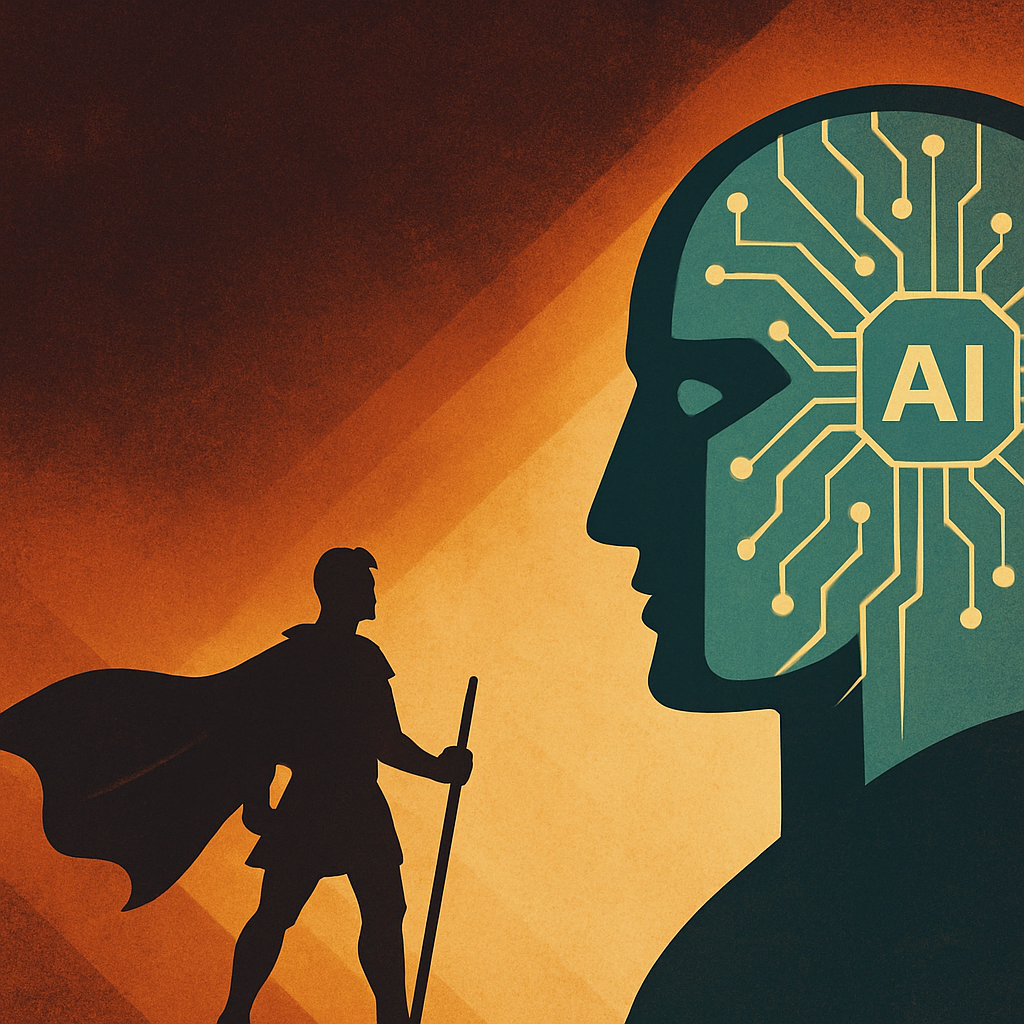
I was an anomaly then (and now too) – a digital leader turned storytelling preacher. I was a crusader for authenticity against a backdrop of “content” clogging feeds and funnels with SEO-juiced slop. We turned stories into spreadsheets and then wondered why nobody cared.
I’ve long held a passion for storytelling — I started out as a journalist after all — and frustration with my own profession. In fact, five years earlier in 2009, before becoming WPP’s story guy, I said the following for a book I wrote called The Last Newspaper:
Stories are personal and transformational. Stories have definition and character. Stories are history personified. But content is cold, distant. Content is a commodity – a finite consumable of fleeting value. Content is artificial intelligence.”
Little did I realize how on the nose that would come to be.
A new world of brand storytelling
My original four-step narrative framework – inspired by and adapted from Joseph Campbell’s 12-step Hero’s Journey monomyth – was a simplified guide for brands to break through the content clutter:
- Universal Truth: every great story starts from something human and recognizable.
- Emotional Hero: someone or something who represents the audience’s struggle.
- Twist of Fate: a conflict or unanticipated event that takes the narrative in a new direction.
- Transformation: a problem is resolved, the main character or circumstances are changed, and a new “universal truth” is revealed.
That framework still works. But the landscape of storytelling has radically changed.
Today, AI can draft copy, compose music, render faces, mimic voices, and create entire cinematic universes from a text prompt. It can learn and recreate everything from your brand’s tone to your customer’s preferences. Last year the Coca-Cola Company even produced entirely AI-generated TV spots (and despite critical backlash, they did it again this month.)
This is both exhilarating and dangerous. While it’s easier than ever to create stories, it’s getting harder than ever to make them feel human. The AI Coca-Cola holiday ads looked stunning but felt hollow – narratives with the soul of a wax figure.
Let emotion be your guide
AI is incredible at optimizing performance, but emotion isn’t a performance metric. The brands that win will be those that cultivate their emotional intelligence alongside artificial intelligence.
Stories that cut through the noise will carry human stakes: lived detail, vulnerability, specificity. They’ll be attributable, not anonymous; emotionally resonant, not algorithmically optimized.
“We made this with AI” is not a story. That’s not to imply that AI doesn’t matter or that you shouldn’t use it – AI has opened entire new worlds and formats, allowing anyone to create and tell their stories. We’re living in the digital age’s Gutenberg moment; the Internet was mere prologue.
Stories now have superpowers: simulation, multilingual voice, audience-aware branching, spatial presence. AI is a great co-creator and amplifier. The key is to protect the human core and be transparent about the process. If AI helped shape a campaign, then say so and explain how. Transparency is an invitation to trust.
The Hero’s Journey, revisited
I’m still thinking all this through (the downfall of my human design.) And who knows, this post also might turn into a series and an e-book and a workshop. I’m nothing if not predictable.
In the meantime, here’s some actionable advice to consider for your next hero’s journey:
- Heart (why it matters): Start with a real stake or tension you can name (an origin, a loss, a risk you took)
- Voice (how it sounds): Build a “human voicebook” (cadence, idioms, vocabulary) and train your tools to it
- Context (when/where it lands): Time delivery to attention and emotion
- Proof (how we trust it): Label AI content and keep “behind‑the‑scenes” reels and sources
Our new “Universal Truth”
AI is a storyteller. So where does that leave us – the writers, strategists, and creatives who trained the AI in the first place?
It leaves us with this truth: Originality is a feature, not a bug.
The more our tools become intelligent, the more we’re reminded that humanity is our ultimate competitive advantage.
Because the most valuable story you can tell will always be your own.
 Gary Goldhammer --author and storyteller.
Leave a comment