Yom Kippur is No Time to Apologize

AFTER ALL THESE YEARS OF APOLOGIZING AND ATONING FOR MY SINS ON YOM KIPPUR, I FINALLY GET IT.

Apologizing is easy. Being sorry is hard.

Apology requires little effort. An apology is almost always just words, and saying something is a lot easier than doing something.

We like apologies because they make us feel better. But they aren’t supposed to make us feel better, they are supposed to make the other person feel better – and make us all better as a result.

So I’ve been doing Yom Kippur wrong (my apologies.) From now on, I’m going to stop apologizing for forgetting to check in with friends and family, or for not paying more attention to others. I won’t apologize for working too much, for avoiding conflict, or for not getting enough exercise.

From now on, I’m just going to be sorry:

That I’m often too self-absorbed to look beyond my own “to do” list and ego…

That I drift off when I should be present; joke when I should be serious; turn away when I should step forward…

That I too often use work as an excuse to avoid companionship, and my deafness to avoid almost everything else…

That I can’t accept my body for what it is, and make excuses for not doing more to change it…

That I gave up on my dreams long before they gave up on me.

Being sorry will take a lot more effort. Breaking out of those behaviors and mindsets will be even harder.

I’m still going to try. I may succeed and I may not. Probably a little of both. But there’s one thing I absolutely won’t do.

I’m not going to apologize.

Le Garcon de la Campagne

WE ARE HERE FOR A REASON.

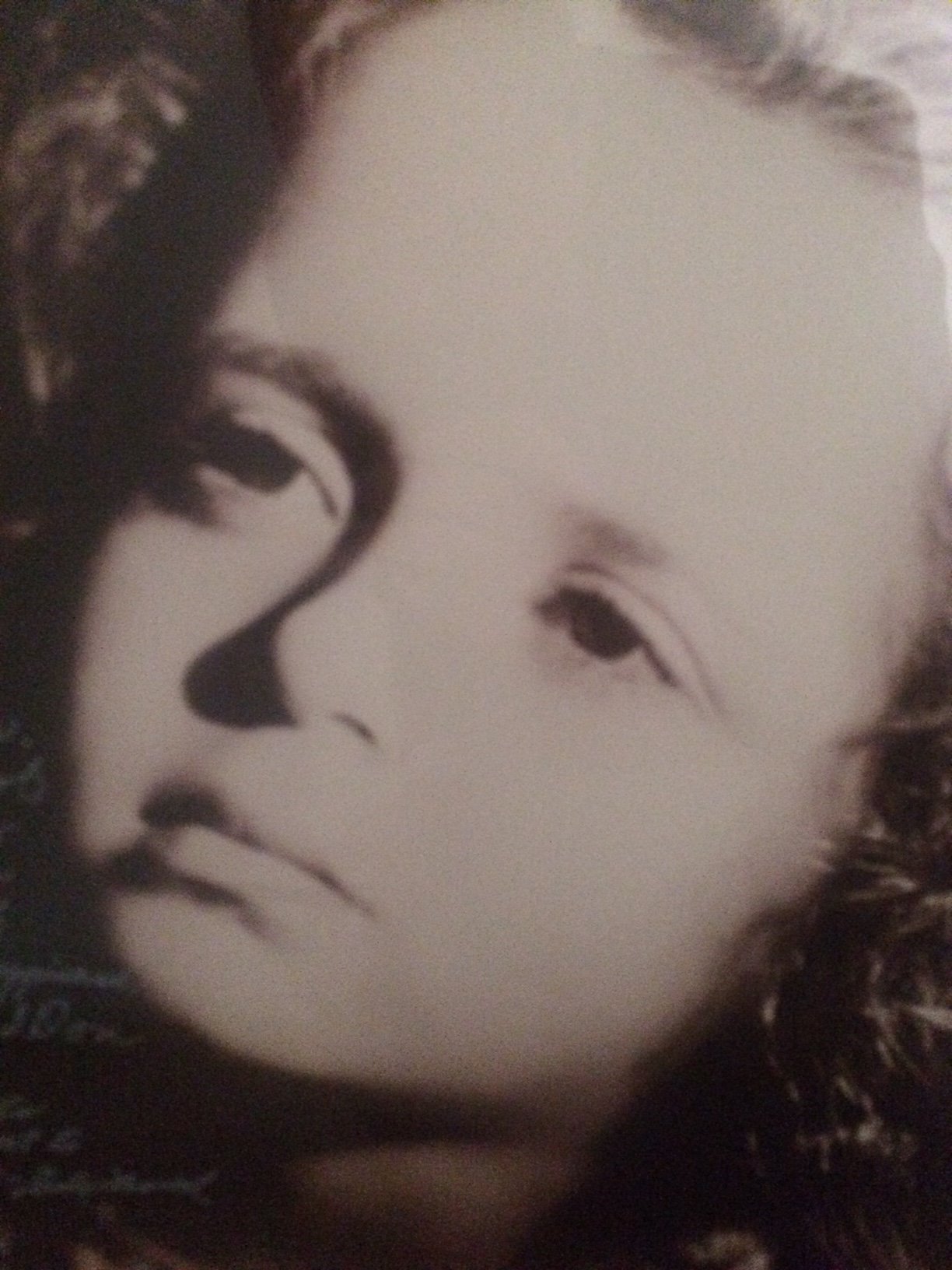
The boy from the countryside didn’t know this yet when he and his mother, a fighter for the French resistance, were stopped near their village and warned about the German soldiers who were looking for a woman and her young son. A six-year-old boy with long hair.

HIs mother turned her bike around and rode away from the Nazis. She took her son to a barber for a haircut that saved their lives and allowed her to continue fighting against the Nazi occupation. This simple act, this impulsive decision, almost certainly allowed the boy’s father to continue his work as a spy for the Allies. It was a haircut that may have helped win the war.

I only know about these events, and many others, because that boy from the countryside told me while sitting around his dining table, after all of us ate too much French cheese and meats and bread. He told me while we drank Oban and looked across his property into Germany, free people enjoying a cool summer evening because of sacrifices known and unknown.

I listened because he was part of my wife’s family, a proud Frenchman and enlightened historian. I listened because I loved his deep voice, his expressive cheeks, and his hearty laugh that shook the foundations of his home.

We are here for a reason — some of us to be the story, some of us to be the storytellers. And for some, like the boy from the countryside, to be both.

I’m sharing this now because that boy from the countryside, the one who became the man from Blies-Ébersing, died last week. So now it’s our job to make sure he and his stories aren’t forgotten. And if I might add a postscript, to call out those who would erase the past and replace it with something aberrant.

History isn’t supposed to make us feel better about what we’ve done; it’s supposed to make us better despite what we’ve done. We must keep the past alive and intact, tell the stories, bear witness, and hold ourselves and the future accountable.

We are here for a reason — not to change history, but to see that it changes us.

Coming to Terms with Mother’s Day

I USED TO DREAD.

Didn’t matter what the horizon bore. Could be a holiday, an anniversary, an important business call or a random Tuesday night Angels game in April. I would find something to dread, to wish wouldn’t happen, to pray would go away.

The “after” was always fine, but I never took solace in after. The after was erased as soon as it arrived, as if every moment was another exercise in foreboding.

Until I figured out why.

For years – all of them between age eight and age 49 – I took solace in my dad no longer being with us. I told myself that losing all memory of him was a gift, a shield against loss. After all, you can’t miss someone you never knew. I was spared years of pain and just, well, moved on.

Only I wasn’t spared. I moved on in my life but not away from the past.

Dread replaced loss – it occupied that space in my head where acceptance should have been. Somewhere in the rewiring of my eight-year-old brain the ability to learn from the past became a constant fear of the future.

Then in late 2016, my mom died. And something amazing happened.

I remembered her.

Not just the recent history, but every damn thing. I saw it all, could almost reach out and touch the years as if they were branches on a tree. I climbed, and climbed, and remembered more than I thought possible.

And unlike that eight-year-old boy, I was able to grieve. The shield against loss was gone, cracked into countless insignificant shards.

Loss has its place. It’s necessary, I know now. The human experience is nothing without darkness – because if we don’t know the dark, we’ll never recognize the light.

So I won’t dread this Mother’s Day. I won’t dread Father’s Day next month. I won’t celebrate, either. I still can’t do that. But now I will do something even better.

I will remember.

Remembering What a Career is Really About

FIRST YOU HAVE A RESUME.

You build it, hone it, compile it like a greatest hits album. A one-page masterpiece of adjectives and bullet points.

Later you create a bio, a superlative narrative of your experience, skills, and passions. The resume is a black-and-white television, but a bio is an 85-inch 4K entertainment system with Dolby surround sound.

Goodbye “jobs,” hello career.

And then, one day, you realize none of it matters anymore.

That it never did.

Because work was never about the jobs, the resume, the promotions. It wasn’t about your LinkedIn profile or how much wine you drank in Cannes. It wasn’t even about the money, the perks, or the awards.

It was about the people. It was always about the people.

I’ve forgotten most of my jobs and titles, forgotten more work than I remember. I’m not sure how I got this far without someone figuring out I was making this stuff up as I went along.

But I remember the late nights with Tracy and Larry, putting together yet another Disney scope for some something or other. I remember sitting around my kitchen table with Greg and Linda, talking about our new partnership and building a business. I remember being in a conference room with David and Dina telling me about Edelman and feeling like I just got drafted to play for the Yankees.

I remember Gail and Cricket, Siobhan and Gerry. I remember Bleeker and Rick and Lela, Matt and Torre, Chad and Beno. I remember playing guitar on stage in Athens at WPP Stream, countless dinners in New York with colleagues turned friends, so many drinks in so many cities when no one talked about work because even then, especially then, we somehow knew that the work would never last but the people would last forever.

The people are what you never forget.

I don’t have a career made of work; I have a career made of relationships. My career is about the people I’ve met and who shaped who I am today. Who I’m still becoming.

Build your resume. Craft that bio. Make a career. Do what you love – but most of all, do it with people who will be there when everything else goes away.

Love Unfiltered: Learning to Lean into Grief

“I started the morning crying.”

This was how Emma Hemming-Willis began her Instagram video marking her husband Bruce Willis’ 68th birthday. The former action star has dementia – and while the video showed a smiling Bruce Willis singing along with his family, Emma didn’t want to pretend that every day was a good day.

Her confession, if you want to call it that, was raw and real. As it should be. It was as emotional as you’d expect it to be. It was vulnerable and strong, heart-rending and uplifting. Human grief on full display.

But it wasn’t sad, not really.

In “WandaVision” (yes, I’m about to quote a Marvel show), the character Vision consoles a heart-broken Wanda, saying, “What is grief, if not love persevering?” It’s a beautiful line, poignant in context and powerful in its message about dealing with loss.

I don’t disagree with the sentiment. But grief is more than just love persevering. Grief is love unfiltered. It’s love in its highest and greatest form.

Rather than shy away, Emma Willis leaned in. She embraced her grief, was perhaps even grateful for it, because it allowed her to fully express her love without reservation.

It would have been easier to avoid her feelings, to suppress or hide her grief. But that wouldn’t have been fair to her husband, her family, or herself.

I’ve experienced my fair share of loss (as I’m sure we all have.) And I’ve always avoided grief, rejected it, put it away and buried it. That was my way of coping with loss – trying to forget that I ever lost in the first place.

I was wrong. I should have leaned in. I denied myself, my family and my friends of all that unfiltered love.

I’m thinking about this, about Bruce Willis, because of someone else who has dementia. What matters now is what we, his family and friends, decide to do going forward.

Support him and care for him. Eat and drink and laugh and cry with him. Be there for him when he knows we’re there, and especially when he doesn’t. Treat him with respect and dignity, compassion and patience.

And when we have those inevitable bad days, when the grief takes over, we need to let it. We need to lean into it. Grief is good for the soul – because it’s not just love persevering, but unfiltered love everlasting.

Blankets and Body Bags

WE SOUTHERN CALIFORNIANS ARE INURED TO EARTHQUAKES.

We did the drills in elementary school, packed the survival kits and planned our escape routes. And when a major quake happened – Northridge in 1994, Whittier in 1987, Sylmar in 1971 – we stood in our doorways and lit our candles and waited for power and safety to be restored.

People died, but not as many as might be expected. Property was damaged, but for the most part not irreparably. We made our insurance claims and shared our stories and as sure as bumper-to-bumper traffic on the 405, our lives went back to normal.

There are around 100 earthquakes a day in California, tremors so small that we don’t feel them. We get two or three larger quakes (in the 5.0 range or more) each year, which sometimes cause minor to moderate damage but rarely any loss of life.

Earthquakes are serious business but they are also business as usual here. They’re part of the overall cost of living, right up there with sunscreen and valet parking. We don’t think about them until we have to think about them – and then we forget until the next one.

When the quake that hit Turkey and Syria happened, I admit I didn’t get it at first. The full scope of the damage and devastation took time to take hold. The death toll rose faster than a thermometer in the desert, from a few thousand to 10,000 to now more than 25,000 lives and still counting.

I didn’t fully understand until we had dinner with some friends who know someone in Turkey. Their Turkish friend lost her business and her home; her mother is missing.

“We need blankets and body bags,” she said. Not money or food, not first aid supplies or blood donations.

Blankets and body bags. That’s the reality we don’t see. The reality we don’t want to know.

The Turkish and Syrian governments failed to act quickly, failed to see the reality in front of them, failed to do the one thing, the only thing, that governments are supposed to do – protect and care for their citizens. Forget about Turkey’s shortsighted incompetence or Syria’s ongoing 12-year civil war. This was a time to put humanity first and they blew it.

Our infrastructure may be stronger here in SoCal. We may be more prepared and able to ride out a Big One with far less severe consequences. But that doesn’t mean we have to remain numb whether an earthquake happens next door or 7,000 miles away.

As Southern Californians we should know better. As people and as governments, we need to do better.

Because while 25,000 is catastrophic, one death, especially when avoidable, is still too many.

How you can help:

Make Sure They Don’t Die in the Parking Lot: A Pandemic Story

I’m typically not one for anthologies or looking back. The future is almost always more interesting, not to mention that stories are better when you don’t know how they end.

Two years removed from my first bout with Covid, however, and the story continues. Not for me (though I did go one more round with Apollo Crud last August), but for many others still dealing with the virus or reeling from its long-term effects. This PDF mash-up of past blog posts and new-ish material is for them and anyone else who needs to laugh, or cry, or use the past as prologue for a better tomorrow.

We don’t know how the story ends. But that doesn’t mean it’s not worth telling.

What Happens Next

“IS ANYBODY GOING TO DIE?”

This was the first thing my therapist said after ten minutes of anxiety-fueled ranting. Ten minutes of what I thought was a pretty good case for The World Ending, an inevitable demise that was all my fault and I’ll never recover and how could this happen before I’d ever get to watch season three of Ted Lasso? Life not only wasn’t fair but cruel.

None of this mattered to her. I mean for $175 an hour I expected at least some acknowledgement of my suffering, a Starbucks gift card, anything. Instead, all I got was a question.

“Is anybody going to die?”

You’re healthy, she said (for now, I thought – what about my shoulder that needs to be replaced soon?)

You don’t have to worry about money, she reminded me (okay but what if there’s a deeper recession and you know my daughter’s wedding someday in the future isn’t going to pay for itself.)

You have a family and friends who love and care about you (until I do something stupid again and then I’ll be ghosted like Casper.)

I didn’t say any of those things, preferring instead to keep them within the spiral of my inner monologue. I just listened – and after a while, I relaxed.

I saw myself from the outside looking in. Suddenly the reason why I thought life was over sounded ridiculous. Now I was embarrassed for mentioning it, for believing it mattered, for allowing myself to get pulled into the quicksand of doubt once again.

But I wasn’t going to die and neither was anyone else. That doesn’t diminish what I was feeling in that moment, nor is it meant to discount what others feel when life doesn’t go their way.

I never expected to share this with anyone – no one needs to know nor should they care. But after months of seeing friends and former colleagues lose their jobs, many reaching out here on LinkedIn for help and support, I just want you to know that it’s okay to feel whatever you feel.

And that what matters now is how you choose to respond.

Life isn’t lived in the past. It’s not about what happened, but about what happens next.

You’re going to be fine. You’re going to be great.

You know, on second thought, maybe that $175 an hour is paying off after all.

Art and Magic

Great art is indistinguishable from magic. The artist not unlike a God among mortals.

Sometimes the art is so great, so perfect, such a “normal” occurrence, we forget about the artist. And that’s natural – most of us don’t think about Gods every second of every day. We go about our lives, secure in the knowledge that they are there with us despite our ignorance.

But then a God performs one final magic trick. They become mortal. And they leave us with their art as a reminder of the God they once were.

Be honest: Did you listen to Jeff Beck’s music the week before he died? Did you jam out to David Bowie or appreciate the majesty of Christine McVie’s songwriting on a regular basis before they passed?

Of course not. And that’s okay, you weren’t supposed to. These artists were Gods; they were never going to die. And when you believe people are going to be with you forever, you stop thinking about them. You take them for granted and assume they will always be there whenever you need them.

Like our family and friends. Like all the people we see all the time or hardly ever, until one day they’re gone.

We shouldn’t wait until our Gods become mortal to remind us that connection matters. That by simply being present in someone’s life you can change it for the better. You don’t need to be an artist or a God to leave a lasting impression on the world.

If that’s not magic, I. don’t know what is.

Timeout on the Field

You don’t have to be a football fan to feel for what happened to Buffalo Bills player Damar Hamlin on Monday night.

A young man, doing what he loves, collapses and goes into cardiac arrest. One moment normal, the next unbelievable. The game stops, the teammates gather and pray. Timeout on the field.

We don’t want to speculate about what happens next for him. We don’t want to talk about football or the playoff implications, nor should we. This is about life and death, a tragedy and a trauma played out on national television. This is collective shock and grief.

And it is a painful but important reminder.

I’m not trying to be morbid or melodramatic – that’s far too easy. We all know “life is precious” and that we should “make each day count” and that “life can change in an instant.” Cliches and catch phrases are but a temporary salve for our fears.

Instead, we should all take a cue from the NFL. We need a timeout on the field, wherever and whatever you play.

Be present with your loved ones for a while. Do something for someone else. Call a friend just to say hello, or better yet, call someone with whom you had a falling out and apologize.

Play will resume. We will go back to our regular lives and do our work and cheer for our teams and make big deals about little things. But maybe, every once in a while, we can call timeout and remind ourselves why we play in the first place.