• The best advice I ever got was on the golf course. Even by the most liberal standards my game was terrible – I had all the sports acumen of an awkward Jewish kid from the Valley whose mom made him play catcher because at least he’d have to wear a mask. Still broke my glasses twice (always the overachiever.)

    Bad posture and lack of any core strength aside, my swing was all over the place. My instructor smothered me with demonstrations and tips and videos and cheat codes to trick the ball into doing what golf balls are designed to do.

    It worked some of the time. It didn’t work most of the time. A maddeningly perfect metaphor for life – I kept trying no matter how bad I was at it.

    And then I learned about the fixed point.

    A close friend and genuinely good golfer saw what I was doing, could see my brain calculating All The Things – feet position, club face, backswing, hip movement, follow-through – and failing miserably. It was like trying to hit a golf ball using a Rube Goldberg machine.

    Slow it down, he said. Forget about all the steps. Just look at the ball and find a spot – any spot – and aim your club. That spot is your fixed point. Don’t do anything else except focus on your fixed point.

    So I did. And the ball flew, high and straight. I tried it again, same result. I focused on my fixed point and nailed that obnoxious Titleist down the fairway like kicking a bad habit.

    Golf is still frustrating – that’s just what golf is. There are no perfect days. There’s joy and pain. Sometimes you question why you keep playing when you know how it’s going to end.

    Focus often feels like a luxury. We multitask and juggle schedules and make personal and professional promises we can’t possibly fulfill without ending up in therapy or a mortuary. We mistake activity for progress. “Time to think” doesn’t look good on a billable hour report.

    But to do it all is to do nothing at all.

    Find your fixed point and focus. Block out the noise and the distractions. Tell your doubts to take a day off.

    Then swing like hell.

  • ABSENCE AND PRESENCE.

    We see them as being different. Absence cannot be presence, so therefore presence cannot be absence. It’s immutable fact.

    Not exactly.

    You can be there and also not there. Present while absent. I know this to be true because I’ve seen it. In fact I saw it recently, on a sun-drenched hill overlooking a serene Ozark lake.

    My wife’s aunt Scottie died so long ago I can’t remember. But I also can’t forget her, no more than I can forget the color of the sky.

    Her story continued over the years, told and retold as if scripture. People who never met Scottie would swear they knew Scottie, could hear her infectious laugh and see her gleaming smile. She was so much bigger than life that life could no longer contain her.

    So when I saw that smile attached to her granddaughter’s bridal bouquet, it made all the sense in the world.

    Scottie, like the bride’s maternal grandfather whose gentle face also adorned that special bouquet, was a beloved link in the family circle. But circles don’t break when someone dies, they expand. Her presence just grew bigger, that’s all. Her embrace widened to hold a fresh set of family members now joined by marriage, her stories soon to become their stories too.

    Circles expand.

    They encompass new lives and create new experiences. They remind us that no matter how far we’ve come, we are never at the end.

    We are always just beginning.

  • YOU ARE ON THE EDGE OF A CLIFF.

    You have two choices: stay where you are, or move ahead. Most of us would pick the former, or better yet go back to solid ground. To stand still.

    And wait.

    Maybe your calling will find you there. Maybe your dreams will come for you, ready to give you purpose.

    Maybe you will be happy, but more than likely you will just be…

    Waiting.

    For happiness to arrive. For certainty to anchor. For something, anything to happen because you’ve been so damn patient and deserving and spent time with people for all the wrong reasons and now you’re alone and that’s fine but now you realize waiting isn’t what comes before the thing, waiting has become the thing.

    And then you’re back on the cliff.

    But maybe this time you leap.

    Because now you know can’t find happiness, it has to find you. You have to trust yourself and create your own purpose. You have to go over the edge.

    Because sometimes we wait too long for our dreams to come to us.

  • There’s that scene in Good Will Hunting, you know the one. Not the iconic “how do you like them apples” moment outside the bar, but one just as memorable if not more impactful.

    Sean, the psychologist played by Robin Williams, tells Matt Damon’s eponymous Will Hunting character about the abuse he suffered as a child. Sean then tells Will that he doesn’t need to be ashamed or feel guilty about the abuse he suffered, either. Will says he understands, but it’s not until the tenth “it’s not your fault” that Will Hunting breaks down in acceptance.

    The moment is emotional and powerful. It’s the entire movie summed up in four words. And Sean was right – the abuse wasn’t Will’s fault. We can’t help what fate or circumstance deal us, what people think of us or do to us.

    We can’t help it, but too often we let it. We let guilt and doubt and shame poison our minds and contaminate our thoughts. We gaslight ourselves.

    I’ve seen a lot this behavior over the past few years, even experienced it myself. The pandemic ended but for many the isolation remained. Connections frayed or got cut. The good times made us happy, but they also left us blind to those who would leave us behind as soon as life became too hard.

    So we questioned our choices and our worth. We started sinking and self-medicating, feeling as useless as the broken chips at the bottom of the bag. We drifted so far outside ourselves as to be unrecognizable.

    It seemed hopeless – but it was all a lie. Like Dorothy in The Wizard of Oz, we had the power to get back all along. We make our own poison, but that means we also have the antidote.

    There are forces we can’t control. But we can always, always control how we respond.

    It’s not your fault that some people ghosted you. It’s not your fault that you got laid off, or that the new job didn’t work out. And it’s definitely not your fault nor any reason to feel ashamed that you needed to talk to someone or get prescribed something to help you move forward.

    We can cure ourselves, as long as we have the help and support from family and friends who are willing to tell us it’s not our fault over and over until we believe it. Not only will you feel better, but you will BE better than all those people who tossed you aside or put you down in the first place.

    Now, how do you like them apples?

  • Back when I was (much) younger, in the days when forever had no end, I never thought about these moments.

    The world, as they say, just keeps spinning. And even if it didn’t, do you know what would happen? We wouldn’t fly off into space. We wouldn’t die. The world would go on but with half of us in eternal light and half in eternal darkness. How we kept going, how we survived would depend on which side we were on, the dark or the light. But go on we would, same as always.

    So when she was born I didn’t think about her first steps. When she started walking I didn’t think about her first pair of skates or seeing her ride a bike. I didn’t look ahead to her going to high school, didn’t wonder about sports she would play or friends she would make, and lose, and make again.

    The college years were fun, but I didn’t dwell on her eventual graduation (and good thing, too, since the grand ceremony never happened thanks to Covid.) This was just how life was, how it was always going to be – visiting her in DC while on work trips, still seeing her as a kid with every passing birthday, and speaking in the secret language of fathers and daughters that I’m sure drove her mother crazy.

    And then the walls came down.

    THE ROOM WHERE THOSE WALLS ONCE STOOD hadn’t changed since we bought the house in 1996, more than two years before our daughter, now 25, was born. The previous owner was an artist and had hand-painted a Winnie-the-Pooh themed mural with all the characters of the Hundred Acre Wood.

    We couldn’t bring ourselves to paint over it – not when she moved out of that nursery room into a proper bedroom down the hall; not when the “Pooh Room” as we came to calling it became a guest bedroom/music room/Pilates studio.

    Through high school and college, through moving to Chicago and through her engagement last December, we didn’t touch those walls. We didn’t dare.

    But thanks to some much needed foundation work, the time finally came this week. A part of me still didn’t want to believe it, didn’t want to admit it. I didn’t care about the room – I’m glad that it’s now going to be a real office for me to work in – but I cared about what it represented. The room was a moment in time locked in stasis where Winnie-the-Pooh, Christopher Robin, Piglet, Tigger, and Kanga and Roo and all the rest never aged, never got sad, never had their feelings hurt, never got bullied, never got scared or suffered.

    A room where no one had to grow up.

    The walls are gone now, but that’s okay. The memories are still there. Besides, as I said before, the world keeps spinning, even if it sometimes feels otherwise. We still have a choice – to pick a side, the dark or the light.

    I was in the dark for a long time. In glorious denial. I wanted to stay in that place where forever had no end, so I didn’t have to suffer the curse of the inevitable.

    But then the walls came down, and the light came rushing in. And while the future is no longer infinite, it is, for the first time in my life, much more clear.

  • I often wake up in the middle of the night, thirsty.

    No, not thirsty – parched to the edge of delirium. So desperate for water I can’t think beyond taking a single precious sip, imagining it may be my last.

    This ritual is a psychosomatic reminder of the worst night of my life almost 31 years ago. I was in the ICU recovering from brain surgery, unable to move or speak, my only company the sound of machines and the Filipino nurses chatting in their native tongue.

    I couldn’t eat or drink and – you guessed it – I was thirsty beyond belief. My mouth was dry, my throat as coarse as the Sahara. All I wanted was a little water, but all I got was a small spoonful of ice chips once an hour, on the hour.

    It was a maddening, sick torture. I didn’t sleep all night – I just stared at the clock, watching each minute pass with the speed of someone walking through knee-deep mud, waiting for a relief so fleeting it might as well not have happened at all.

    I’ve never told anyone this before, but that night I wanted to die. I survived a surgery that had no guarantees of success only to wish I’d never woken up. I thought about how I might do it – pull out some tubes, mess around with the buttons on those damn machines. But like I said, I couldn’t move, could barely twitch my fingers. I was trapped, frozen in place for what felt like would be an eternity of ice chips and agony.

    At some point I was moved from the ICU to a room, from a room to a nearby hotel, then finally home. I had palsy on one side of my face, but that healed. I couldn’t feed myself for days, but soon I was using a fork and knife on my own. I had to learn to walk again, to manage the dizziness as my brain “reset” from losing a hearing nerve, but within a couple months I attended a friend’s wedding without using my walker (I had to lean on my wife almost the entire time, but I didn’t mind that part.)

    And I learned something that has stuck with me for 31 years: we are not our worst days. Not even close.

    I wanted release that horrible night; what I got was resolve.

    I wanted an end to pain; what I got was patience.

    I wanted to regret; what I have now is gratitude.

    My nightly undying thirst isn’t a curse, isn’t a burden, isn’t a hell revisited.

    It’s a message that living is worth it. Living is how you get through it.

    Living is how you win.

  • What is real? How do you define ‘real’? If you’re talking about what you can feel, what you can smell, what you can taste and see, then ‘real’ is simply electrical signals interpreted by your brain.”

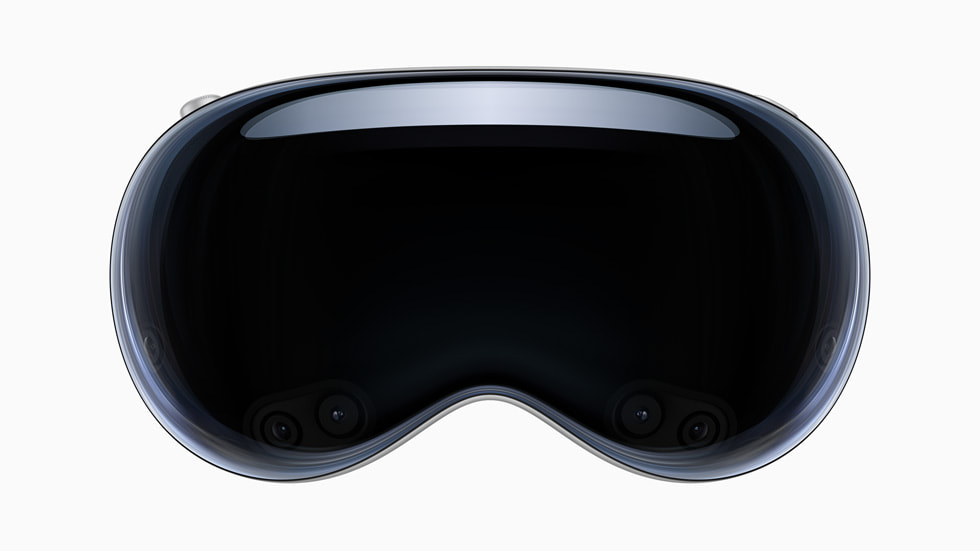
    Morpheus (and Immanuel Kant for that matter) didn’t need the Apple Vision Pro to change their views about the “real” world. Our senses serve as the primary interface through which we understand and navigate the world. Yet these sensory inputs undergo a complex process of interpretation and construction by our brains, crafting the reality we experience daily.

    I’m hearing impaired, which creates a different reality for me. I can’t tell the direction of sound, can’t hear certain tones, can’t understand conversations at a dinner table (reading lips and “faking it” get me through most of the time.) My reality is different than yours – it’s mediated by my physical limitations.

    Are the immersive, digital experiences created with VR any less “real” than those mediated by our natural senses? We might argue that all of our experiences, whether natural or technologically enhanced, are forms of “mediated” reality.

    The launch of the Apple Vision Pro may push us closer to fully realizing the concept of mediated experiences. In Casey Neistat’s video below, he says the device “isn’t the future of AR or VR, this is the future interface of all computing.” I don’t disagree. Once the hardware starts looking less like oversized ski goggles and more like Ray-Bans, the potential is staggering.

    But don’t be fooled – this isn’t a technology story, it’s a biology story. This is a story about the fundamental aspects of cognition and human perception. As we continue to explore and integrate these technologies into our lives, we are not just changing how we interact with the world; we are also expanding our understanding of what it means to live and perceive within it.

  • I’ve never dwelled on the notion of success. It’s far too subjective, too egotistical, too personal, and often too random.

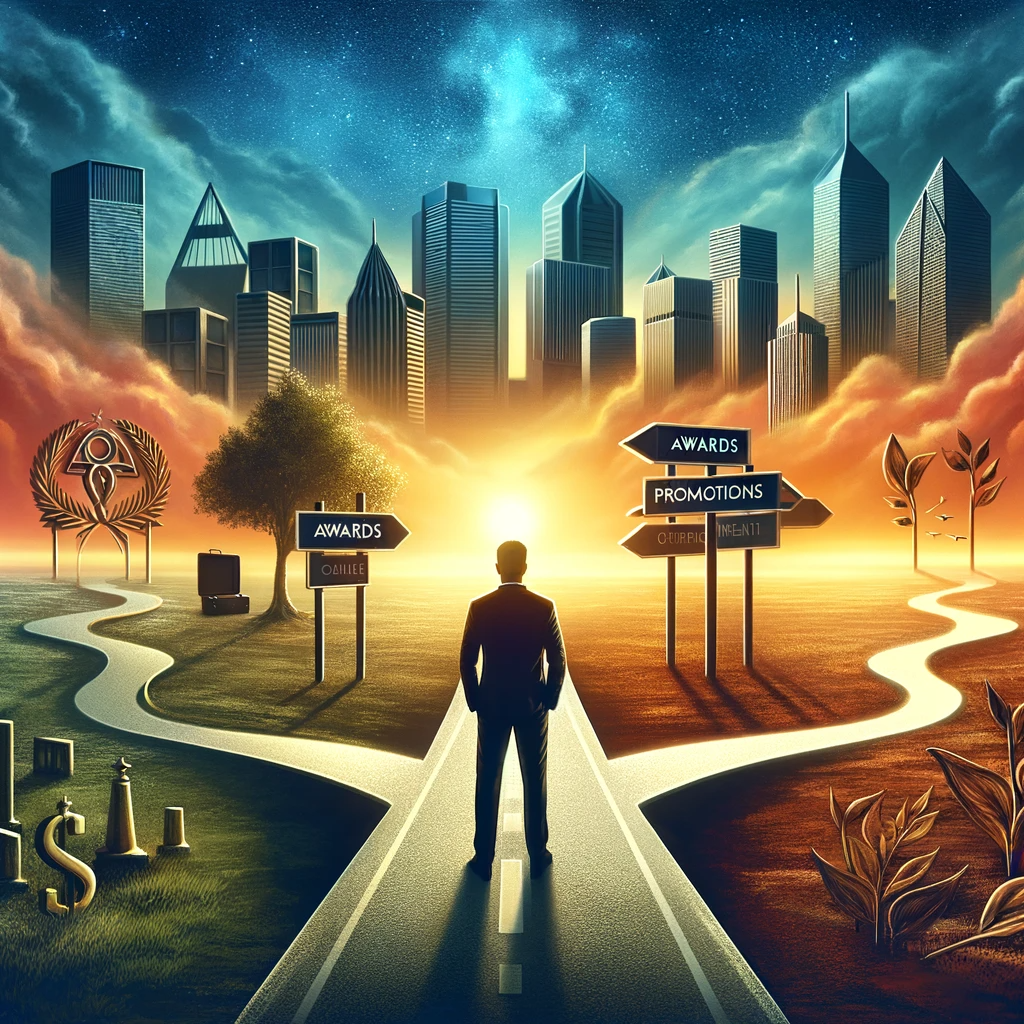
    For some, winning awards or making a lot of money or being promoted is success; for others it’s getting out of bed and taking a shower. For me, success exists somewhere between ‘didn’t get fired today” and “opened the canned chicken without incident.”

    Like I said, subjective. 

    Here’s the point: success isn’t about getting it right. Success is about knowing you’re going to get it wrong – and doing it anyway. It’s about living with purpose, not seeking perfection. It’s about finding meaning, not blind ambition. 

    The most successful people I know have been ignored, belittled or otherwise dismissed for their ideas. Some of them are financially well-off, some are living paycheck to paycheck. But they are all content with their station because they pursued purpose and meaning, not ambition.

    I wish I had this perspective on success a long time ago. I would have accepted my mistakes better, not taken myself so seriously, not have been so worried about what others thought about me.

    I wish I knew that success is a decision, not an outcome. You can’t wait for everything to be perfect before you decide to be happy.

    Choose to be successful. Don’t let others define success for you. Be what your purpose demands.